Joshua Obimba — June 4, 2026
Agree or Disagree: We Need Less Edtech
“I used to disagree with this statement. I build edtech — disagreeing was easy. Then I visited Top Goodness Secondary School in Lekki, Lagos, sat with a group of students who already had access to tools we'd all be proud to build, and watched them not use a single one. That visit changed the question for me. Not "how do we build more?" but "are we building the right things at all?"
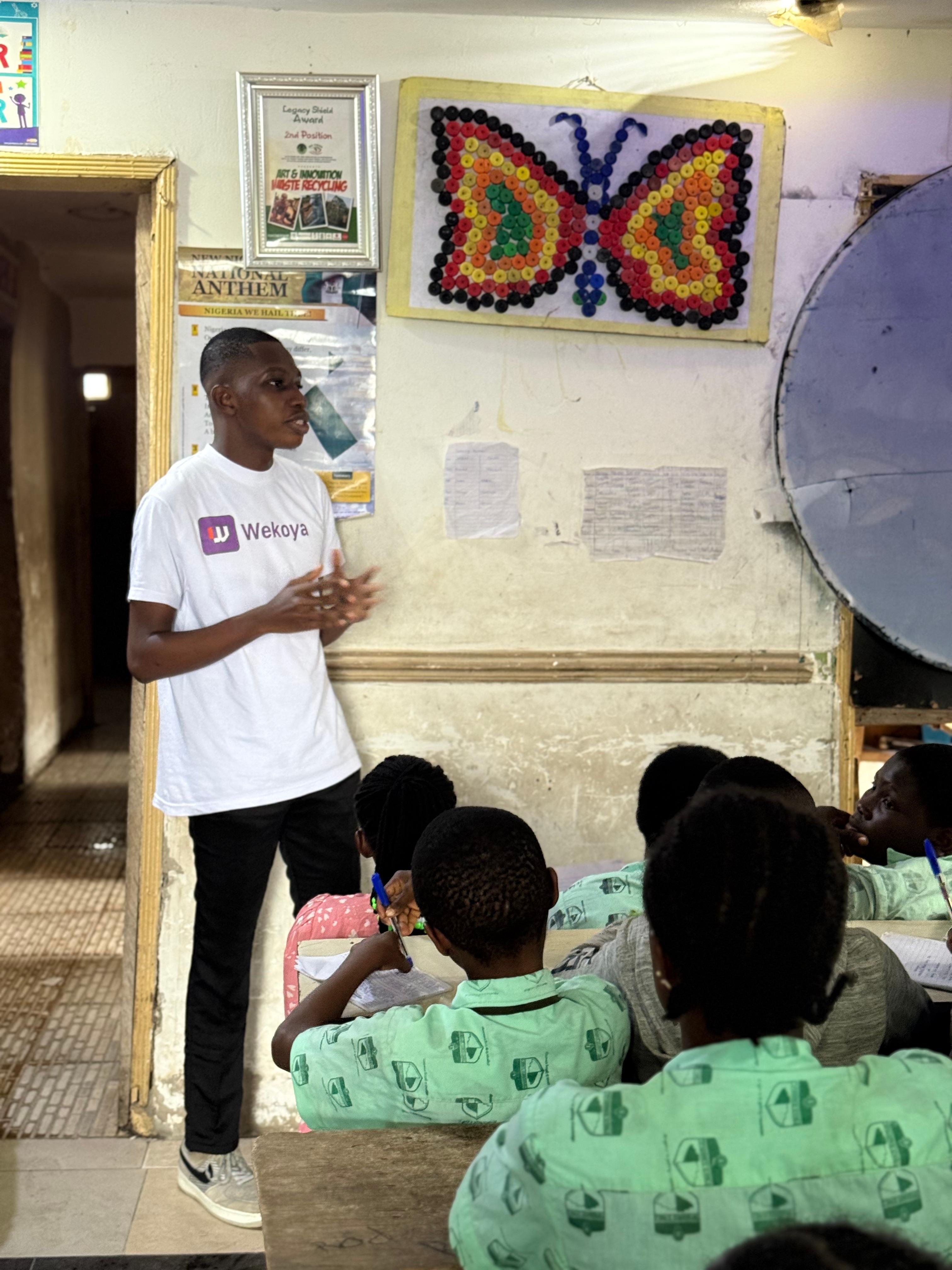
Last week, Wekoya partnered with Caring Hands Empowerment Foundation to visit Top Goodness Secondary School in Lekki, Lagos. The goal was simple: show up, have real conversations with students, inspire them, and leave them with something useful — premium Wekoya accounts to support their learning as they prepare for WAEC and other exams.
It was a good day. An impactful day, even.
But something happened during those conversations that I haven't been able to stop thinking about since.
The Question That Changed Everything
I was talking to a group of students — smart, curious, clearly motivated — and at some point I started asking about the tools they use for studying. Not just Wekoya. All of it. The apps. The platforms. The resources.
And what I found wasn't what I expected.
These students had access. Many of them had phones. Several already had accounts on various edtech platforms. The tools existed.
But they weren't using them.
Not because of connectivity. Not because of cost — at least not for the ones in that room. It was something else. Some didn't quite understand how to get value from the tools. Some didn't see the tools as relevant to what they were actually trying to do — pass their exams, understand a concept, prepare for a specific challenge. Some had simply never been shown why the tools mattered.
I kept asking myself the same question on the drive back:
“If students have access to the tools and still aren't using them — what exactly are we building?
10 New Edtech Products a Week
Here's the thing about the edtech industry right now — it's loud. I see an average of 10 new edtech products every week. Sometimes more. Every week, someone is launching a platform, an app, a learning management system, an AI tutor, a gamified curriculum tool.
Nigeria alone has 34% of the top 50 edtech companies in Africa. The market is projected to reach $400 million in Nigeria by end of 2025. Globally, edtech crossed $189 billion last year.
The numbers are impressive. The activity is undeniable.
But here's the question that keeps me up at night: How much of that activity is translating into actual learning?
Because the evidence is uncomfortable.
A landmark study across 73,000 students and over 1,000 schools in Sub-Saharan Africa found that the promise of edtech as an equalizing force remains largely unfulfilled — not because of a lack of technology, but because of inadequate digital literacy, limited teacher preparedness, and tools that were simply not designed for the context they were dropped into.
Research in Nigeria specifically found that many edtech programmes fail before they even start. Devices get locked in cupboards. Platforms go unused. Technology becomes — in the words of one researcher — "a decorative idea rather than a learning tool."
And then there's the line that hit me hardest when I read it recently, about Edukoya — one of Nigeria's most promising edtech startups, which raised $3.5 million, the largest pre-seed of its kind in Africa at the time, and shut down in early 2025:
"Outputs are not outcomes."
Nigeria Edtech: By The Numbers
Of Africa's top 50 edtech companies are headquartered in Nigeria.
Projected size of the Nigerian edtech market by the end of 2025.
The total valuation crossed by the global edtech market last year.
The Adoption Mismatch
Note: High market activity and startup funding are not automatically translating into student outcomes due to low digital literacy and lack of context-appropriate design.
We're Measuring the Wrong Things
Part of the problem is what we celebrate.
We celebrate downloads. We celebrate accounts created. We celebrate devices distributed. We celebrate funding rounds. We celebrate press coverage.
A 2024 analysis by NORRAG found that many edtech programmes — including donor-funded ones — measure success by the number of devices distributed or applications installed, rather than tracking whether students actually learned anything differently.
That's not impact. That's activity dressed up as impact.
And as founders, we're not innocent in this. The pressure to show growth — from investors, from partners, from the industry — pushes us toward metrics that are easy to count. Downloads are easy to count. Learning outcomes are not.
The result? We build for optics. We ship features that look impressive in a demo. We design for the person signing the procurement contract, not the 15-year-old sitting in a classroom in Lekki trying to understand quadratic equations before WAEC.
Outputs vs. Outcomes
The gap between what edtech platforms report to the public and what students actually experience.
Outputs (Vanity Metrics)
Easy-to-measure metrics that create a perception of growth but don't guarantee learning.
- •App Downloads & InstallsMeasuring devices containing the app, regardless of student usage.
- •Accounts & RegistrationsTracking signups that often end up dormant after the first day.
- •Devices DistributedDeploying hardware that often gets stored away or locked in cupboards.
- •Funding Raised & PressCelebrating startup announcements that don't impact classroom comprehension.
Outcomes (Real Impact)
Harder-to-track behavioral changes that demonstrate authentic academic growth.
- •Comprehension & RetentionStudents mastering complex topics and retaining what they study.
- •WAEC & Exam PerformanceMeasurable improvements in test outcomes and secondary transition rates.
- •Active Classroom IntegrationTeachers actively incorporating digital tools into daily lesson plans.
- •Contextual EngagementDesign that works with local constraints (intermittent power, high data costs).
“Outputs are activity dressed up as impact. Outcomes are where actual learning happens.”
The Real Problem Isn't Access Anymore
This is the part that the industry needs to sit with.
For years, the narrative has been: if we just get devices into the hands of students, everything changes. And there was a time when that was partially true — pure access was the bottleneck.
But for a growing number of students, especially in urban Nigeria, that bottleneck has shifted. The Rwanda example is instructive: a large-scale government laptop distribution programme did not improve learning outcomes in maths or reading. Not because the laptops were bad. Because laptops alone were never the answer.
The bottleneck now is adoption. Relevance. Behaviour change.
Teachers who understand how to integrate tools. Platforms that meet students where they actually are — linguistically, culturally, academically.
The industry hasn't fully caught up to this shift. We're still optimizing for access in a world where many students already have access but still aren't engaging.
A Question I Have to Ask Myself
I run an edtech company. I believe in what we're building at Wekoya. But sitting in that classroom in Lekki, I had to ask myself honestly: Are we part of this problem?
Are we designing for real student behaviour, or for the ideal student we imagine in our heads? Are we measuring whether students are actually learning better, or just whether they're logging in? Are we building for the exam halls of Lagos and Ibadan, or for some abstracted version of a learner that doesn't quite exist?
These questions don't have easy answers. But I think the willingness to ask them is what separates builders who genuinely want impact from those who want to be in edtech.
What Needs to Change
I don't think the answer is less edtech. I think the answer is more honest edtech.
That means:
Building with students, not just for them
Spend real time in real classrooms. Listen to what students say — and what they don't say. The students in Lekki didn't tell me the tools were bad. They just didn't see them as relevant to their immediate reality. That's a product problem. That's a design problem. That's on us.
Measuring outcomes, not outputs
Not downloads. Not active users. Whether comprehension improved. Whether exam scores moved. Whether a student who was struggling with biology is now not struggling. That is the true north metric.
Designing for context
The tools that work in San Francisco don't automatically work in Surulere. Language, curriculum, device constraints, connectivity, cultural context — all of it matters. Products that ignore these realities will continue to be locked in cupboards.
Being honest with investors and partners
The market projections are exciting. But growth without impact is just noise. The investors who matter are increasingly saying the same thing — the era of vanity metrics is over. Prove that the technology works in the classroom.

Why I'm Still Building
I came back from Lekki unsettled — but not discouraged.
Because what I also saw was hunger. Students who want to do well. Students who were genuinely excited when they understood that the tools they'd been given could actually help them prepare for their exams. Students who just needed someone to show them the bridge between the technology and their actual goal.
That's the job. Not building the most feature-rich platform. Not raising the biggest round. Not getting on a top 50 list.
The job is making sure that a student in a public secondary school in Lagos can open a tool, immediately understand why it matters for them, and leave that interaction a little more prepared than they were before.
We haven't fully solved that yet. Nobody has. But it's the only problem worth solving.
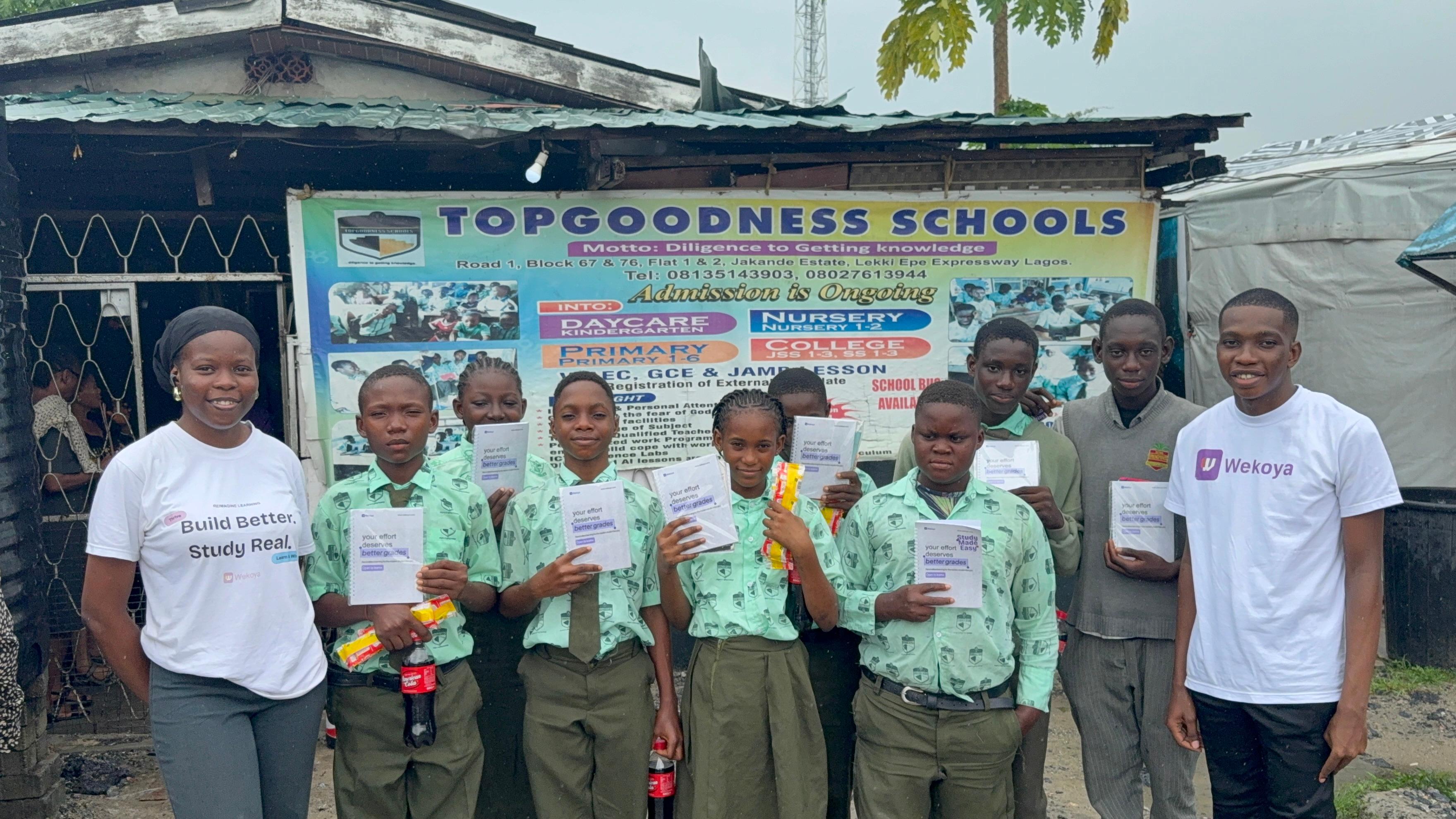
Joshua Obimba is the Co-founder & CEO of Wekoya, a learning platform built to help African students prepare for and succeed in their examinations. Wekoya recently partnered with Caring Hands Empowerment Foundation for an educational outreach at Top Goodness Secondary School, Lekki, Lagos.
Enjoyed this story?

Ready to reimagine learning?
Unlock AI-powered summaries, fun challenges, and collaborative tools to help you thrive in school.
JOIN WEKOYA TODAY